Oral Biopsy
& Pathology
Answers, Not Guesswork.
When a sore, lump or patch inside the mouth will not settle, examining the tissue under a microscope is the only way to know exactly what it is. A biopsy is a short, straightforward procedure that turns uncertainty into a clear answer.
Request a Consultation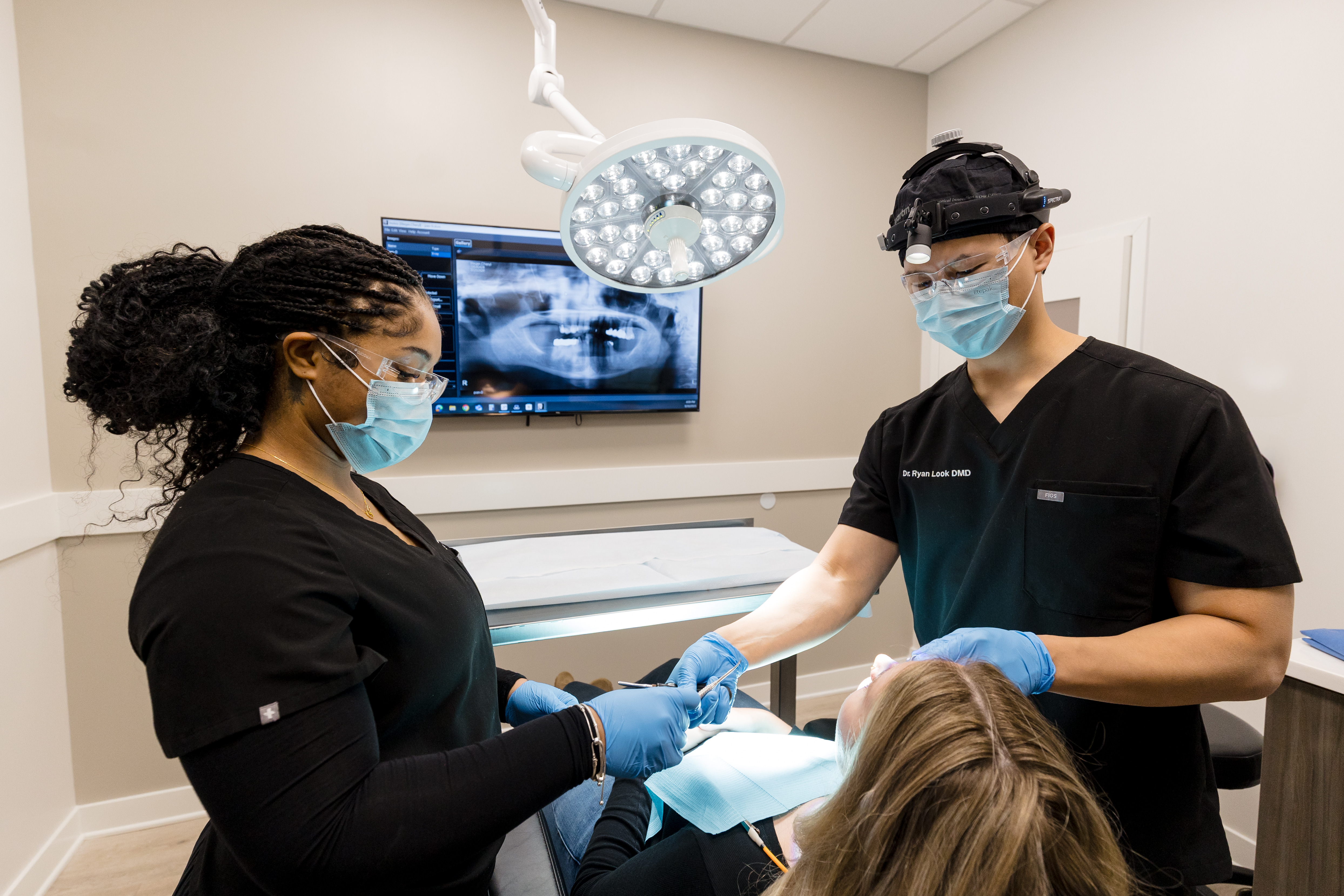
Definitive Diagnosis
Microscopic analysis identifies what an exam alone cannot.
Prompt Appointments
Suspicious lesions are prioritised, often within the same week.
Local Anesthesia
Most biopsies take only a few minutes with the area fully numbed.
Board-Certified Surgeons
Dr. Look and Dr. McElveen, with oral pathology training.
Oral Biopsy in White Plains & Waldorf, MD
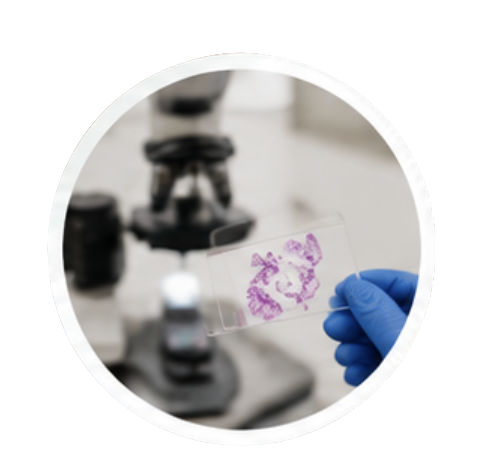
An oral biopsy is the removal of a small sample of tissue — or sometimes an entire small lesion — so that it can be examined under a microscope by an oral pathologist. The mouth is lined with tissue that reacts to a great many things: friction from a sharp filling or denture, viral and fungal infections, immune conditions, medications, tobacco and alcohol. Many of those reactions look broadly similar to the naked eye. A biopsy is how we tell them apart with certainty rather than treating a best guess.
At Charles County Surgical Arts in White Plains, MD, Dr. Ryan Look and Dr. John McElveen evaluate and biopsy oral lesions for patients throughout Charles County, including Waldorf, La Plata and Brandywine, as well as St. Mary's and Calvert counties. Both are board-certified oral and maxillofacial surgeons, and the diagnosis and management of diseases of the mouth and jaws is a core part of that specialty. It is worth saying plainly: most oral biopsies come back benign. But a biopsy is a diagnostic step, not a diagnosis, and the only reliable way to rule anything in or out is to look at the tissue. Lesions identified early are typically simpler to manage than lesions that have been watched for months.
Warning Signs That Warrant an Evaluation
Book an examination if you notice any of the following. None of these findings means something is seriously wrong on its own — they simply mean the area should be looked at properly rather than waited out.
- A sore that has not healed in two weeks: Ordinary ulcers and cheek bites usually resolve within about ten to fourteen days. Anything that outlasts that window should be assessed.
- A red or white patch: Persistent white (leukoplakia) or red (erythroplakia) areas on the gums, tongue, cheek or floor of the mouth that cannot be wiped away.
- A lump or thickening: Any new mass, firm area or change in texture in the lip, cheek, palate, tongue or neck, whether or not it is sore.
- Persistent hoarseness: A change in the voice, or a chronic sore throat, lasting more than a couple of weeks without an obvious cold or vocal strain.
- Difficulty swallowing or chewing: A feeling that something is catching, or new discomfort when eating or moving the jaw and tongue.
- Numbness or unexplained bleeding: Altered sensation in the lip, chin or tongue, or bleeding from an area of the mouth with no clear cause.
Who Needs a Biopsy?
A biopsy is recommended when a finding cannot be explained confidently by examination and history alone, or when a lesion has not behaved as expected. That includes areas your general dentist or hygienist has flagged during a routine oral cancer screening, lesions that have changed in size, color or texture, and lesions that persist after an obvious irritant — a rough restoration, a poorly fitting denture — has been removed and given time to settle. It also includes abnormalities found within bone on a panoramic X-ray or CBCT scan, such as a cyst or a radiolucency around a tooth root.
Certain histories make prompt evaluation more important: current or past tobacco use, heavy alcohol use, a previous head and neck cancer, HPV exposure, chronic sun damage to the lower lip, or a suppressed immune system. That said, oral lesions occur in people with none of these factors, which is why any persistent change deserves a look. Almost everyone is a candidate for a soft tissue biopsy; the main considerations are blood-thinning medication, bleeding disorders, and any condition that may affect healing, all of which we review beforehand and plan around.
Types of Oral Biopsy
There is no single biopsy technique. Which one your surgeon chooses depends on the size, site and appearance of the lesion, and on whether removing it outright is sensible in the same visit.
What to Expect, Step by Step
Knowing the sequence in advance takes a good deal of the anxiety out of it. Your surgeon will tailor the details to your case.
Consultation and Examination
We examine the lesion and the surrounding tissues, check the neck and floor of the mouth, and go through your medical history, medications and any habits relevant to healing. Imaging is taken if bone is involved. You will be told what we can see, what the possibilities are, and why a biopsy is or is not being recommended.
The Biopsy Itself
The area is numbed with local anesthetic. The sample is taken, the site is closed with dissolvable sutures where needed, and the specimen is sent to an oral pathology laboratory. Most soft tissue biopsies take only a few minutes, and the majority of patients go straight back to their day afterwards.
Healing at Home
Expect mild soreness once the numbness fades, usually manageable with over-the-counter pain relief. Soft food, gentle brushing away from the site and warm salt-water rinses after the first day are typically all that is needed. Any sutures placed usually dissolve on their own within one to two weeks.
Results and the Plan
The pathology report is typically back within one to two weeks. We contact you as soon as it arrives and explain it in plain language. Depending on what it shows, the plan may be reassurance, periodic monitoring, removal of an irritant, medical treatment, complete excision, or referral for further care with your report and imaging sent ahead.
What a Biopsy Can Tell Us — and How Recovery Goes
A pathology report does more than answer one question. It tells us what a lesion is, whether it needs treating, and whether the area should be watched over time.
What a biopsy can diagnose
- Benign lesions — fibromas, mucoceles, papillomas, pyogenic granulomas and cysts, which make up the majority of what we send off and are often resolved by removal alone.
- Infections — fungal conditions such as candidiasis, and viral or bacterial processes that can mimic more concerning lesions.
- Autoimmune and inflammatory conditions — lichen planus, pemphigoid and pemphigus, which often need ongoing medical management rather than surgery.
- Precancerous change (dysplasia) — abnormal cells that are not cancer but warrant treatment or close surveillance so they can be addressed early.
- Oral cancer — if malignancy is identified, we coordinate promptly with head and neck specialists and stay involved in your care.
Aftercare and what to expect
- Apply gentle pressure with gauze if there is any oozing, and use a cold compress on the outside of the face for the first few hours.
- Eat soft, cool food for a day or two and avoid crunchy, spicy, acidic or very hot items near the site.
- Keep brushing, but work around the wound; start warm salt-water rinses the day after the procedure.
- Avoid smoking, vaping and alcohol while the area heals — each slows healing and irritates the tissue.
- Call us about bleeding that will not stop, worsening pain after day three, fever, or spreading swelling.
- Most people are comfortable within a few days, and the site typically closes over within one to two weeks.
Referring a Patient? We Make It Easy
We accept referrals from general dentists, hygienists and physicians across Southern Maryland for any oral lesion that needs a specialist opinion. If you have found something on a routine oral cancer screening and you are not comfortable watching it, send the patient to us — that is exactly what we are here for.
- Suspicious lesions are triaged and typically seen for evaluation within the same week.
- Biopsy is usually performed under local anesthesia at our White Plains office, often at the first visit.
- The pathology report and our clinical findings are sent back to you, and we return the patient to your care.
- Office hours are Monday to Friday, 8:00 AM to 4:00 PM, at 4185 Altamont Pl, White Plains, MD 20695.
Oral Biopsy Serving White Plains & Southern Maryland
Our White Plains office sits in the heart of Charles County, just off Route 301, with easy access from Route 5 and Route 228. Most patients reach us in under 30 minutes.
White Plains, MD
4185 Altamont Pl, just off Route 301. Free parking and wheelchair-accessible facilities at our home office.
Waldorf, MD
Just a 10-minute drive north on Route 301. See our Waldorf services.
La Plata, MD
Under 15 minutes via Route 301 south. See our La Plata services.
Brandywine, MD
A short drive north on Route 301. Learn more.
Charles County
Serving Hughesville, Indian Head, Bryans Road, Port Tobacco, and surrounding communities. All areas we serve.
St. Mary's & Calvert
Patients from Leonardtown, Prince Frederick, and across Southern Maryland. Leonardtown · Prince Frederick.
Oral Biopsy FAQs
Straight answers to what our Charles County patients ask most before a biopsy.
Two Weeks Is Long Enough to Wait
If something in your mouth has not healed, have it looked at. An evaluation is quick, and knowing is far better than wondering.
Schedule Your Consultation