Bone
Grafting
Rebuild. Restore. Strengthen Your Foundation.
Bone grafting rebuilds jawbone that has been lost to extraction, gum disease or injury — restoring the solid foundation a dental implant needs and helping preserve the natural shape of your jaw.
Request a Consultation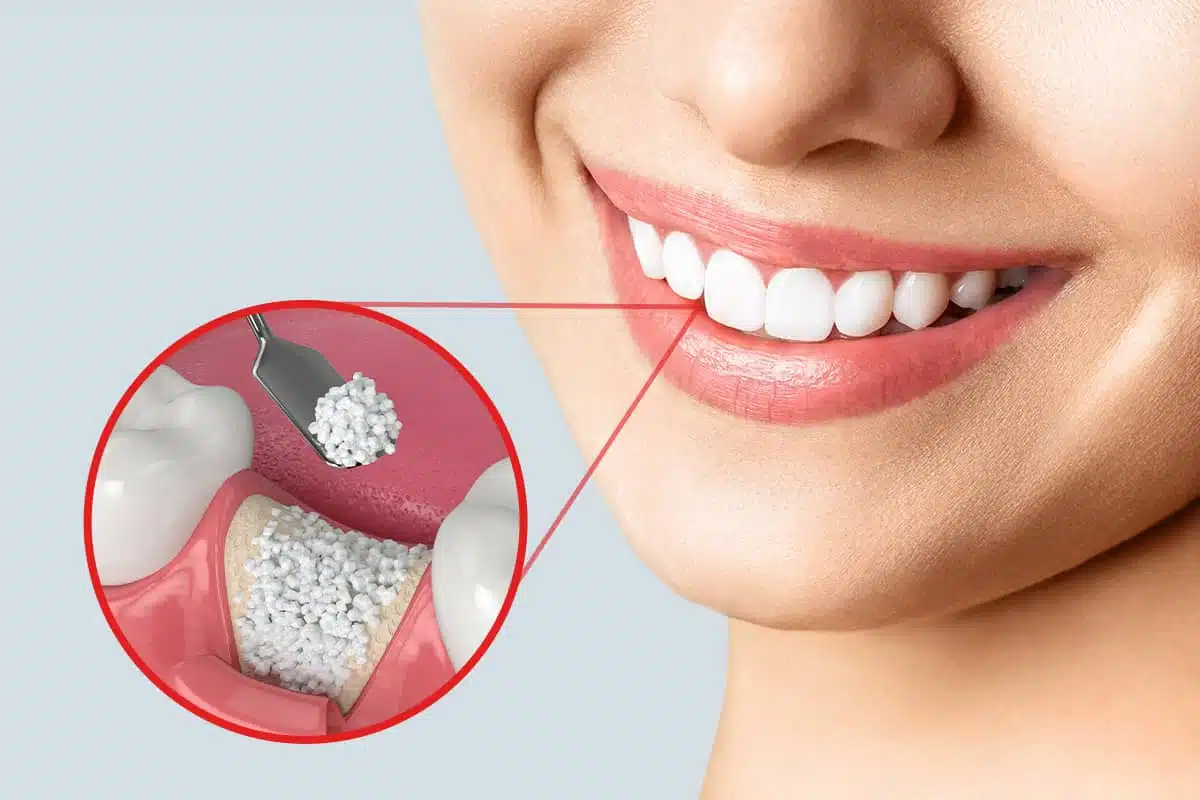
Lasting Results.
Implant Preparation
Builds the bone volume an implant needs to be placed safely.
Socket Preservation
Limits the bone loss that follows a tooth extraction.
3D Planning
CBCT imaging maps your bone before anything is placed.
Board-Certified Surgeons
Grafting performed by oral and maxillofacial specialists.
Bone Grafting in White Plains & Waldorf, MD
Jawbone is living tissue, and it only keeps its volume while it is being used. The roots of your teeth stimulate the bone around them every time you chew; once a tooth is gone, that stimulus disappears and the bone in that area begins to resorb. The change is fastest in the first several months after an extraction and continues slowly for years afterwards. Gum disease, an old injury, a long-worn denture or a failed root canal can all thin the ridge in the same way. Bone grafting reverses that loss by placing graft material into the deficient site, where it acts as a scaffold that your own body gradually replaces with new, natural bone.
At Charles County Surgical Arts in White Plains, MD, Dr. Ryan Look and Dr. John McElveen perform socket preservation, ridge augmentation and sinus lift procedures for patients across Charles County — including Waldorf, La Plata and Brandywine — as well as neighboring St. Mary's and Calvert counties. Both are board-certified oral and maxillofacial surgeons, so grafting is planned as part of the whole restorative picture rather than in isolation. In most cases the goal is a stable site for dental implants, and knowing exactly where the final implant needs to sit is what determines how much bone is built and where it is placed.
When Is a Bone Graft Needed?
Not every extraction site or implant case requires grafting. A graft is generally recommended when one or more of the following applies:
- Insufficient bone for an implant: Imaging shows the ridge is too narrow or too short to hold an implant in the correct position with adequate bone around it.
- At the time of extraction: A socket preservation graft placed immediately after a tooth is removed helps maintain the width and height of the ridge for a planned implant.
- Long-standing tooth loss: Gaps left untreated for years, or areas worn under a partial denture, often lose enough bone that the ridge has to be rebuilt before restoration.
- Periodontal bone loss: Advanced gum disease destroys the bone supporting the teeth, leaving defects that need to be filled once the infection is under control.
- Sinus encroachment in the upper jaw: The sinus floor frequently drops closer to the ridge after upper back teeth are lost, leaving too little vertical bone for an implant without a sinus lift.
- Trauma or a bone defect: A facial injury, cyst removal or congenital defect can leave a contour that needs to be restored before further treatment.
Are You a Candidate for Bone Grafting?
Candidacy starts with a CBCT scan, which lets us measure the height and width of bone actually available and see the position of the sinus and the nerve canal. From there we consider the wider picture. Active gum disease or untreated infection is addressed first, because a graft placed into an inflamed site is far less predictable. Smoking and vaping meaningfully impair healing and are worth stopping well before surgery. Uncontrolled diabetes, some autoimmune conditions, previous radiation to the jaws and certain bone-density medications such as bisphosphonates or denosumab all affect the way bone heals, so bring a full medication list to your consultation. Most healthy adults are suitable candidates, and where grafting is not the right choice we will tell you so and discuss the alternatives — including shorter or angled implants, an implant at a different site, or a bridge.
Types of Bone Graft
“Bone graft” covers several different procedures and several different materials. Which combination is right for you depends on how much bone is missing, where it is missing from, and what the site has to support afterwards.
What Healing Actually Looks Like
Bone grafting asks for patience more than it asks for endurance. The surgery itself is usually straightforward; the real work happens quietly over the months that follow, as your body remodels the graft. Here is a typical timeline, though your surgeon will tailor it to your case.
Placement and Protection
The site is numbed, the graft is placed and the gum is closed with sutures. Most grafts take under an hour. Bite on gauze until any oozing settles, use ice on and off, and stay on cool, soft food. Do not rinse forcefully, spit, smoke or use a straw — and after a sinus lift, avoid blowing your nose and sneeze with your mouth open.
Swelling Settles
Swelling and tenderness typically peak around the second or third day and then ease. Most patients manage comfortably with the pain relief prescribed and are back to desk work within a couple of days. Keep the area clean as directed, chew away from the graft, and leave a denture or flipper out unless we have told you otherwise.
The Graft Matures
Your own bone cells migrate into the graft and gradually replace the material with living bone. You will feel entirely normal long before this process is finished, which is why we confirm progress with imaging rather than by how the site feels.
Implant Placement
Once a follow-up scan shows enough mature bone, the implant is placed. Small socket grafts are often ready at around four months, while larger ridge augmentations and sinus lifts commonly need six to nine. In selected cases with good starting bone, a graft and implant can be placed at the same visit.
Risks, and How We Reduce Them
Bone grafting is a routine, well-established procedure, but it is still surgery, and grafts do not always take completely. Being clear about that is part of good care.
What can happen
- Incomplete graft take — the site may gain less bone than planned, occasionally needing a second, smaller graft.
- Infection at the graft site, which can require antibiotics and, if it does not settle, removal of the graft material.
- Wound opening over the graft, exposing material and putting the result at risk.
- Sinus membrane perforation during a sinus lift, usually recognized and managed at the time.
- Altered sensation in the lip or chin when grafting near the lower nerve canal. This is uncommon and usually temporary.
How we lower the risk
- 3D CBCT imaging before grafting, so sinus and nerve anatomy is known rather than estimated.
- Treating active gum disease and infection first, rather than grafting alongside it.
- Resorbable membranes and tension-free closure, keeping the graft protected and stable while it heals.
- A frank conversation about smoking, vaping and bone-density medications, all of which affect healing.
- Confirming graft maturity with follow-up imaging before an implant is placed, not by the calendar alone.
Cost, Insurance and Financing
The cost of a bone graft depends on the type of procedure, how many sites are involved, the graft material and membrane used, and which anesthesia option you choose — a single socket preservation graft and a bilateral sinus lift are very different pieces of work. We provide a written estimate before treatment begins, so you know what to expect before committing.
- We verify your dental and medical benefits ahead of surgery and file the claim on your behalf.
- Grafting is usually billed separately from the implant itself, and coverage varies considerably between plans.
- Financing is available through CareCredit, Cherry, Proceed Finance and Sunbit.
Bone Grafting Serving White Plains & Southern Maryland
Our White Plains office sits in the heart of Charles County, just off Route 301, with easy access from Route 5 and Route 228. Most patients reach us in under 30 minutes.
White Plains, MD
4185 Altamont Pl, just off Route 301. Free parking and wheelchair-accessible facilities at our home office.
Waldorf, MD
Just a 10-minute drive north on Route 301. See our Waldorf services.
La Plata, MD
Under 15 minutes via Route 301 south. See our La Plata services.
Brandywine, MD
A short drive north on Route 301. Learn more.
Charles County
Serving Hughesville, Indian Head, Bryans Road, Port Tobacco, and surrounding communities. All areas we serve.
St. Mary's & Calvert
Patients from Leonardtown, Prince Frederick, and across Southern Maryland. Leonardtown · Prince Frederick.
Bone Grafting FAQs
Answers to the questions our White Plains and Waldorf patients ask most about jawbone grafting.
Build the Foundation for Your New Smile
Find out whether grafting is needed — and how much — with a consultation and 3D scan at our White Plains office.
Schedule Your Consultation